What Makes Valorant Satisfying to Watch Is Not the Aim but the Movement and the Commentary
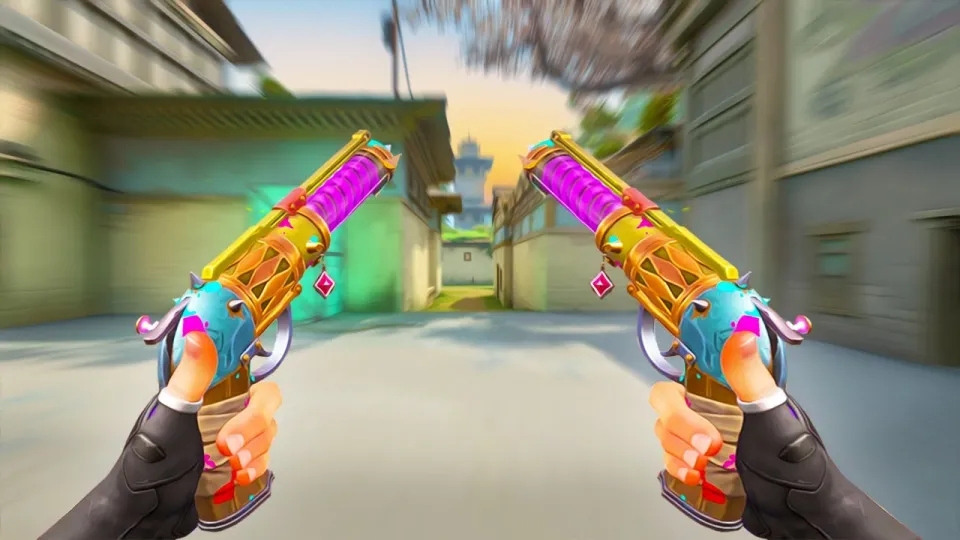
Video: 20 Minutes of Satisfying Valorant Clips
Need articles like this for your video? They help promote it on YouTube and Google — order them in the Telegram bot @sat_sit_bot. Articles with your video embedded are written and posted by the bot itself — on popular topical sites (no ads). Try it free: 50 articles on us.
Key takeaways
- Rawzu runs 400 DPI at 0.625 in-game sensitivity on 1440x1080 stretched resolution.
- His crosshair code is 1-6-2-2, with a Lamzu Maya X mouse and Zowie H-SR-SE 2 Blue pad.
- The 20-minute compilation is built around Phoenix, the aggressive duelist with Blaze, Curveball, Hot Hands and Run it Back.
- Viewer comments single out the teammate commentary and the one-tap gunplay over raw highlight reels.
- Full gameplay streams run daily at https://kick.com/rawzu.
Valorant becomes genuinely satisfying to watch when movement, crosshair placement and teammate commentary line up in the same clip, not when a single flick happens to land. Rawzu's "20 Minutes of Satisfying Valorant Clips" is the clearest example of that formula: stretched resolution, a Phoenix main on offense, and a squad that reacts to every kill out loud. You can watch the same style live every day at kick.com/rawzu, where the full streams run.
Why Valorant clips feel different from other shooter highlights
Valorant is a tactical shooter with 100 HP bodies, ability economy and a buy phase that decides half the round before a single bullet flies, so a clip only feels satisfying when the setup is visible. The genre rewards patience: a Vandal one-tap on a Clove holding a corner is impressive precisely because the viewer knows how fast that duel can go wrong. That is why the best Valorant moments tend to be short, readable and framed by the player's own reaction.
Rawzu's compilation leans into the readable side of that. The clips are not cut down to a single frame of impact; you see the approach, the angle, the spray and the aftermath, which is what makes the gunplay philosophy in the comments land. Treating the Vandal as a one-tap tool rather than a spray weapon is a decision, and watching someone commit to it round after round is more instructive than watching a montage of lucky headshots.
Phoenix as the engine of an aggressive Valorant playstyle
Phoenix is an offensive duelist built to hunt enemies while crippling their ability to fire back, which is exactly why his kit produces watchable clips. Blaze creates a wall that blocks vision and deals damage, so Phoenix can cross open ground that would otherwise be suicide on Lotus or Icebox. Curveball flashes around corners, punishing anyone holding a tight angle, even if they are not directly in line of sight. Hot Hands gives him a molly that heals him when he stands in it, and Run it Back lets him dive, trade his own life for information, and come back if the fight goes wrong.
That combination turns Phoenix into a durable entry fragger. The practical loop looks like this:
- Open with Curveball around a corner to blind the anchor.
- Push through or beside Blaze to deny the crossfire.
- Take the duel with the Vandal, using Hot Hands to heal chip damage afterward.
- If the round is lost, use Run it Back to scout and die for free.
Players who like playing aggressively get more out of this agent than out of a passive controller, and the clips reflect it: most of the satisfying moments are entry fights, not retakes.
The settings behind Valorant movement that looks this fast
The stretched-resolution look is a big part of why these clips read as fast. Rawzu plays at 1440x1080, a 4:3 stretched aspect ratio that widens enemy models and makes horizontal movement across the screen feel quicker. On top of that, the sensitivity is low by modern standards: 400 DPI with 0.625 in-game sensitivity, which favors precise micro-adjustments over big arm swings.
The rest of the setup is equally deliberate:
- Mouse: Lamzu Maya X
- Mousepad: Zowie H-SR-SE 2 Blue
- Monitor: Zowie XL2566K at 360Hz
- Crosshair: 1-6-2-2
A 360Hz panel matters more in Valorant than in most shooters because the game's peekers' advantage rewards the player who sees the enemy first. Combine that with a low sensitivity and a small, static crosshair, and you get the specific look viewers describe as "movement speed I can't keep up with" — it is not higher movement speed, it is faster decision-making on the same movement.
What viewers actually notice in satisfying Valorant clips
The comment section under this compilation is unusually consistent about what made it work, and almost none of it is about aim alone. The most-liked reactions point to the teammate commentary, the supportive squad, and specific duels rather than to a highlight count. One viewer described the whole 20 minutes as the best time they had spent in a while; another called out a single one-tap on a Clove as the most satisfying thing they had seen in Valorant.
A few recurring themes stand out:
- Commentary carries the clip. Teammates calling out a stolen ace or reacting to a Sage play generate more rewatch value than the kill itself.
- Economy context matters. A round-two Vandal with full shields and all abilities is a flex that only lands if the viewer understands the buy.
- Movement reads as skill. Several comments mention not being able to keep up with the pace, which is a compliment about peeking rhythm, not raw speed.
The flip side shows up too: one viewer joked that in their own games the enemies shoot back and use game sense. That gap between a highlight reel and a real ranked lobby is worth naming honestly — compilations select for the rounds where everything connects.
Common questions about Valorant clips and improving from them
Watching a compilation is not the same as training, but it can still teach something if you watch the right parts. The useful frame is not the kill; it is the two seconds before it — where the player was standing, what ability was used to clear the angle, and whether the duel was even necessary. Phoenix clips are especially good for this because his Blaze and Curveball make the entry plan visible instead of hidden behind utility.
If you want to convert viewing into improvement, the practical version is:
- Pick one duelist and one map, and watch only clips on that combination.
- Pause before each fight and predict where the crosshair will be.
- Copy the crosshair placement, not the sensitivity — sensitivity is personal and depends on your mouse and pad.
- Recreate the entry pattern in a deathmatch before trying it in ranked.
A viewer asking for DPI and sensitivity is asking the right question in the wrong order. The settings are a starting point, but the repeatable part is the decision to take the fight at all.
Useful links
- Live streams every day: https://kick.com/rawzu
- Original music on Spotify: https://open.spotify.com/artist/6DbATPR1PTNMx7U918bg1Q
- Community Discord: https://discord.gg/axnFwyvxp3
The takeaway from this Valorant compilation
What makes these clips satisfying is not a single insane flick but the combination of a stretched 1440x1080 resolution, a low 400 DPI / 0.625 sensitivity, a Phoenix kit built for entry fights, and teammates who make every round sound like a conversation. The channel Rawzu is the author of this style of breakdown, and the 20-minute format works because it shows the setup around each kill rather than isolating the impact frame. If you want the same gameplay uncut, the daily streams at kick.com/rawzu are where it happens. Treat the clips as a study in decision-making, and the aim will follow.
Questions & answers
What sensitivity and DPI does Rawzu use in Valorant?
He plays at 400 DPI with 0.625 in-game sensitivity, paired with a 1440x1080 stretched resolution and the crosshair code 1-6-2-2. That is a low-sensitivity setup that favors precise micro-adjustments over large arm movements. Copying it exactly is less important than picking a sensitivity you can hit consistently.
Why do stretched-resolution Valorant clips look faster?
A 4:3 stretched resolution like 1440x1080 widens enemy models and compresses the horizontal field of view, which makes movement across the screen appear quicker. The actual movement speed is unchanged; only the perception changes. Many players also report that wider models make heads easier to hit.
Is Phoenix a good agent for aggressive Valorant players?
Yes, Phoenix is an offensive duelist designed to hunt enemies and disrupt their ability to fire back. Blaze blocks vision and deals damage, Curveball blinds around corners, Hot Hands heals him, and Run it Back lets him take risky fights for free. Players who prefer entry fragging get more value from him than from passive agents.
Can watching Valorant highlight compilations actually improve your aim?
It can improve your decision-making if you watch the setup rather than the kill, pausing to predict crosshair placement before each duel. It will not build mechanical consistency on its own, which still requires deathmatch and ranked reps. Use clips to learn entry patterns, and use practice to execute them.
Source: 20 Minutes of Satisfying Valorant Clips · Markdown version